
Headless CMS Architecture: The Future of Flexible Content Management
Traditional content management systems have served businesses well for decades, but the digital landscape demands more flexibility than monolithic CMSs can provide. Headless CMS architecture represents a paradigm shift that separates content creation from content presentation, enabling brands to deliver consistent experiences across websites, mobile apps, IoT devices, and emerging touchpoints.
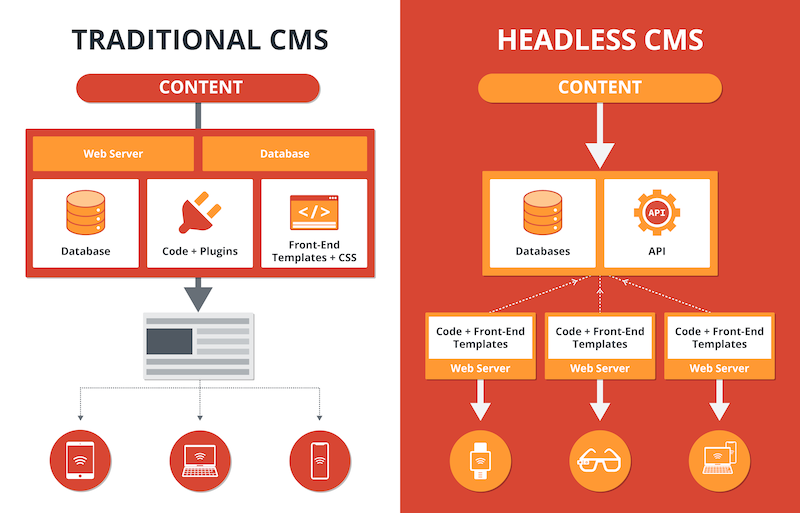
Unlike traditional CMSs that tightly couple the backend content management with frontend presentation, headless architecture treats content as data that can be consumed by any frontend application through APIs. This separation empowers businesses to innovate rapidly while maintaining content consistency across all customer touchpoints.
Core Components and Architecture Benefits
A headless CMS consists of three primary components: the content repository, API layer, and presentation layer. The content repository stores all digital assets and structured content, while the API layer serves as the bridge between backend content and frontend applications. The presentation layer comprises various frontend applications that consume content through API calls.
This architecture delivers significant advantages over traditional systems. Performance optimization becomes achievable through faster loading times, as frontend applications can be built using modern frameworks optimized for speed. Scalability improvements allow businesses to handle increased traffic and content volume without compromising user experience.
Developer productivity increases dramatically when teams can work independently on backend content management and frontend presentation. Content creators focus on producing quality content while developers build engaging user interfaces using their preferred technologies and frameworks.
Implementation Strategies for Commerce Success
Successful headless CMS implementation requires strategic planning and technical expertise. Begin by evaluating your current content workflows and identifying pain points that headless architecture can address. Consider factors like content volume, team structure, technical requirements, and integration needs with existing systems.
Content modeling becomes crucial in headless environments. Design flexible content structures that accommodate multiple presentation formats while maintaining consistency. Create reusable content components that can be assembled differently across various touchpoints.
API design plays a critical role in implementation success. Develop robust APIs that handle content delivery efficiently while providing necessary flexibility for different frontend applications. Consider implementing GraphQL for more efficient data fetching and reduced API calls.
Integration planning ensures seamless connectivity between your headless CMS and existing commerce platforms, marketing automation tools, and analytics systems. This connectivity maintains workflow continuity while leveraging headless architecture benefits.
Performance and Scalability Advantages
Headless CMS architecture delivers measurable performance improvements that directly impact business results. Faster page load times result from optimized frontend applications that request only necessary content through targeted API calls. This speed improvement enhances user experience and supports better search engine rankings.
Content delivery networks work more effectively with headless architectures, enabling global content distribution with reduced latency. Static site generation becomes possible, creating extremely fast-loading pages that improve conversion rates and user engagement.
Scalability benefits extend beyond performance metrics. Development teams can scale frontend applications independently based on traffic demands while maintaining stable backend content management. This flexibility proves invaluable during traffic spikes, seasonal campaigns, or rapid business growth.
Multi-channel content distribution becomes effortless as the same content APIs serve websites, mobile applications, voice interfaces, and future digital touchpoints. This approach ensures consistent messaging while reducing content management overhead.
Choosing the Right Headless CMS Solution
Selecting an appropriate headless CMS requires careful evaluation of business requirements, technical capabilities, and growth objectives. Consider factors like content complexity, team size, budget constraints, and integration requirements with existing systems.
Popular headless CMS options include Contentful for its developer-friendly APIs and robust feature set, Strapi for open-source flexibility, and Sanity for real-time collaboration capabilities. Each platform offers unique advantages depending on specific use cases and technical requirements.
Evaluation criteria should include API performance, content modeling flexibility, user interface quality, security features, and ecosystem integrations. Consider long-term maintenance requirements and vendor support quality when making your decision.
Ready to implement headless CMS architecture that transforms your content management strategy? Commerce Ace specializes in headless implementations that drive measurable business results. Our expertise in modern commerce architecture, AI personalization, and custom integrations ensures your headless CMS delivers maximum value while supporting your growth objectives.
